
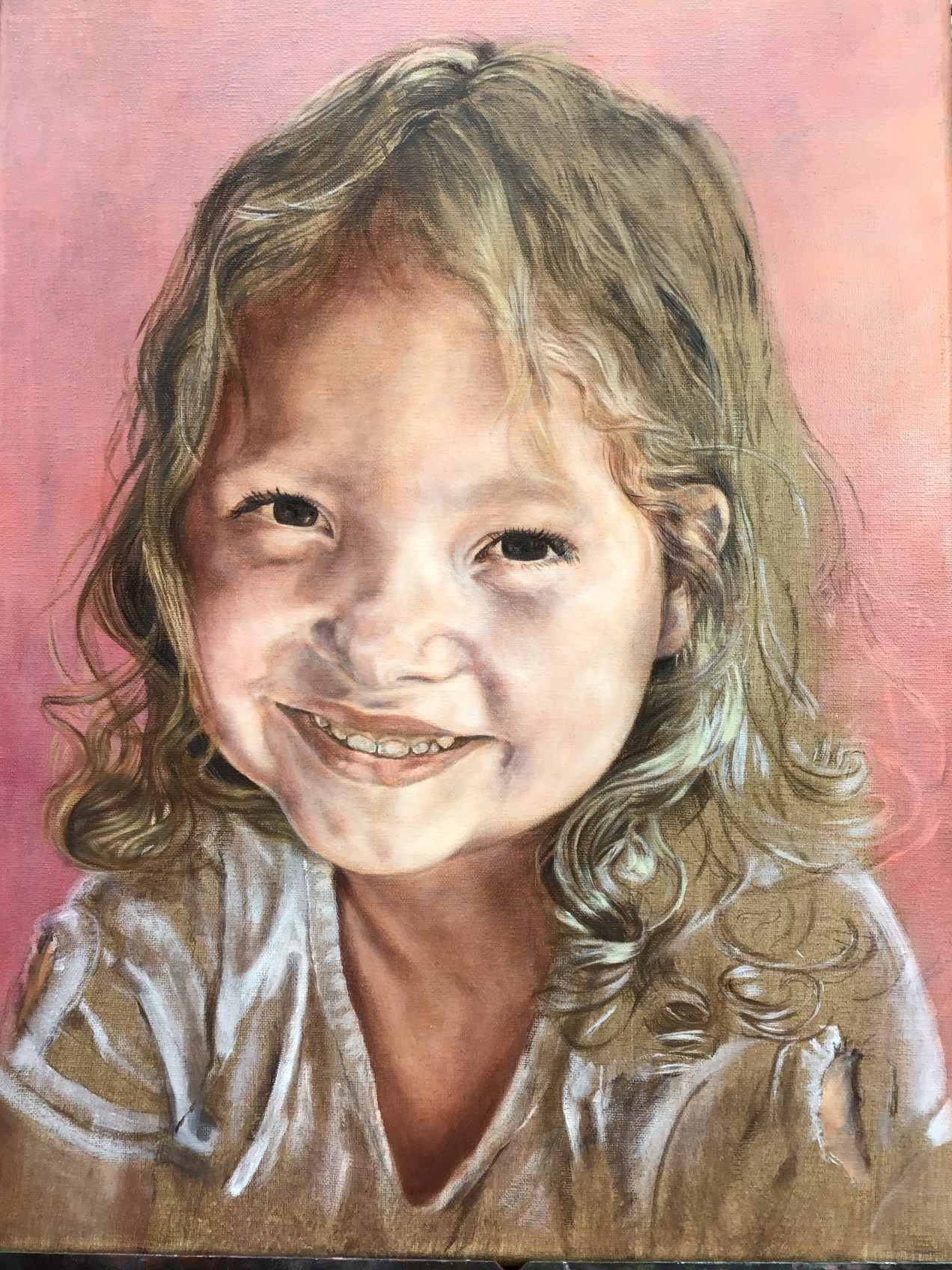
When people look at a portrait, they may think it looks simple. This image is at the stage where I always realize how complicated it is. I did a demonstration for my class last week to show them how to proceed with the flesh. The early layers are easy. You put on the flesh color mixed with a transparentizer and then you sculpt in the light with white or Naples yellow or whatever mixture the skin tones require. Do this as many times as necessary. BUT, then, after you establish a deep surface that looks like flesh, that is when you must begin the ‘detailing’. The artist knows what he/she wants. The question now becomes, ‘How do we get there?’ It is here at this point that the teaching becomes more difficult. How does one teach instinct or even the willingness to risk. It feels like a risk when you are not sure what mark to make, but with the method we are using, indirect method, it is not really all that risky. I tell my students that portrait painting is the art of ‘correcting, correcting, correcting!’ I will continue making marks and correcting on this portrait until, like Penochio, she comes alive. Her two brothers made it, I hope she is just as good! Till next time! Diana
Monthly Archives: September 2025
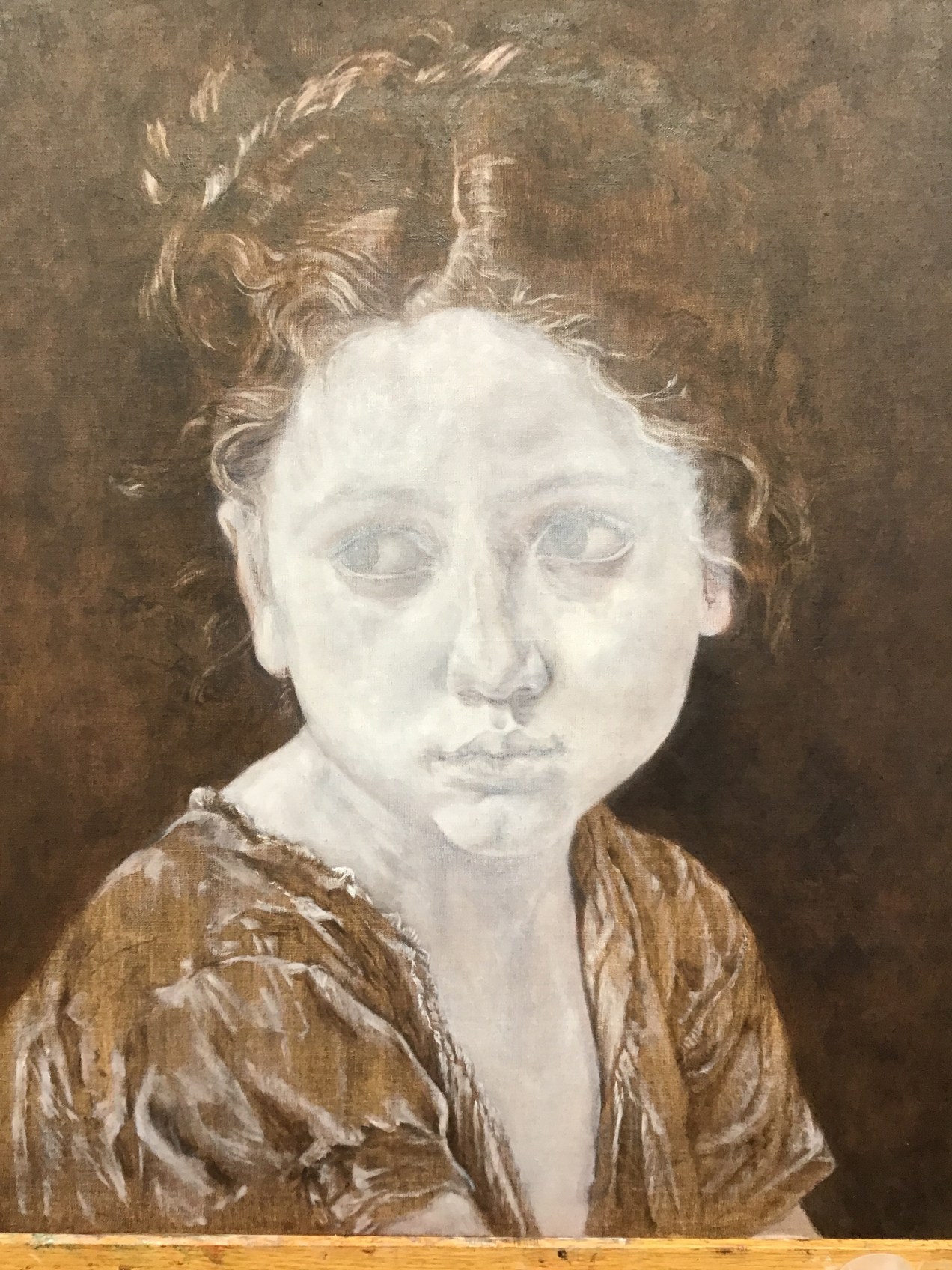
Half paste.
I decided to work on my master copy of the Bouguereau portrait, At the Foot of the Cliff. After establishing the image in darks and brights, I mix lead white and Titanium with a transparentizer that is no longer available. I apply a layer of this half paste and work it into the pores of the canvas. Next, I work it with a soft but firm fan brush in order to remove all but a film of white. I then apply some adjustments where needed with the same half paste only I apply it carefully in a way that brightens and corrects. I also, very carefully, use a cotton swab or brush to lift off more white where more dark should remain or also to correct in areas where needed. Then I buff to a high sheen. This will be the surface where I will begin to add color by painting and glazing. I clean my brushes and cook supper. Hope your painting brings you joy. Shalom, Diana

Time
I am thankful for the years of experience I have accumulated but it sure cramps my style when I have so much to do! I’m bringing in all my orchids which involves scrubbing each one to get the mealy bugs under control. I have had some of these since around 2000 and this critter found them about three years ago. So there is that. Plus many other projects that I won’t bother you with. This painting has been on hold all summer so I am to fit it back into the schedule.
Now my screen won’t let me make a correction, I will print the sentence again. This painting has been on hold all summer so I am trying to fit it back into the schedule. My reference image is not clear so I need to get the fingers correct. In this photo you may be able to see where I have worked on this. Also, I made minute, but important corrections on the lips and nose and around the chin and cheek. Of course this will all be structure under the many layers of transparent flesh that will be applied. I may post again today if I get any work done on my great granddaughters portrait,(see previous images). Till then, Shalom, Diana
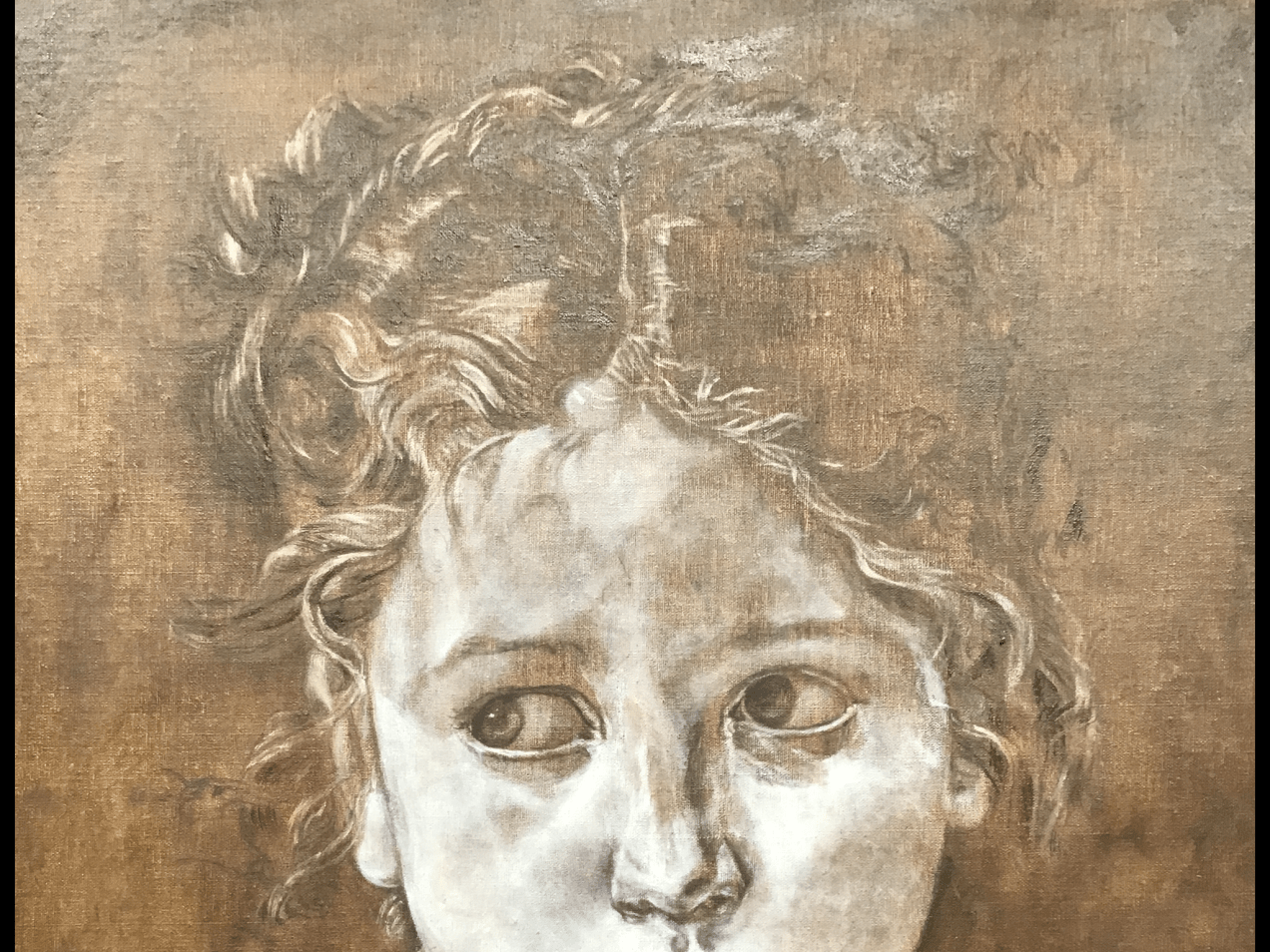
TAKE NOTE, CORRECTIONS!
I could not get the title to load, so I printed it in caps. My subject that I want you to hear is simple. We all make mistakes. If you are painting a portrait, part of your daily routine should be to scan your work and become aware of what you should modify, change, correct. If my painting is not too large, I carry it downstairs so that I can scan it repeatedly as I rest in the evening. In this image I became aware that as I worked and became tired, my mind became less effective in translating my image onto the canvas in the correct dimensional increase. To put it simply, I painted the part in her hair the width of the original image instead of the broader version of the larger canvas. At the end of the work session I recognized that I was having difficulty with this size reference when painting the shadows and folds in the blouse. At the time, I had not discovered the same problem with the hair part. That showed up as I scanned it in the evening. I am just trying to explain that as we paint on a portrait, our brain begins to homogenize everything. It sort of falls asleep, becoming less able to catch the tiny nuances of detail. It is essential that we understand and continually be on guard for this in order to keep ourselves more alert to this creeping into our work. It may seem that this is no big deal, but I am requesting that you place it high on your daily routine. The more you practice this discipline, the less you will need it. Keep in mind that a lot of our work looks great when we finish it and we are content to call it done. Then, after not observing it for hours on end, we see it and immediately we notice a glaring mistake. Have you heard of the artist in ancient times who finished a sculpture of a magnificent horse. Then he committed suicide because he had sculpted five legs.! So, hear my words and begin to adapt to this brain feature that may have you fooled! Happy painting, Diana

modified grasaille
I worked on the brights in her face and began some detail in blouse. I will do more on the blouse, then let it dry before applying a transparent half paste on the flesh. Once I buff that I will again increase the brights in her face where needed. I can probably finish the blouse but prefer to work on the flesh colors until they are done so as not to constantly be cleaning flesh color off the white blouse. I feel like she is appearing on my canvas out of centuries past!
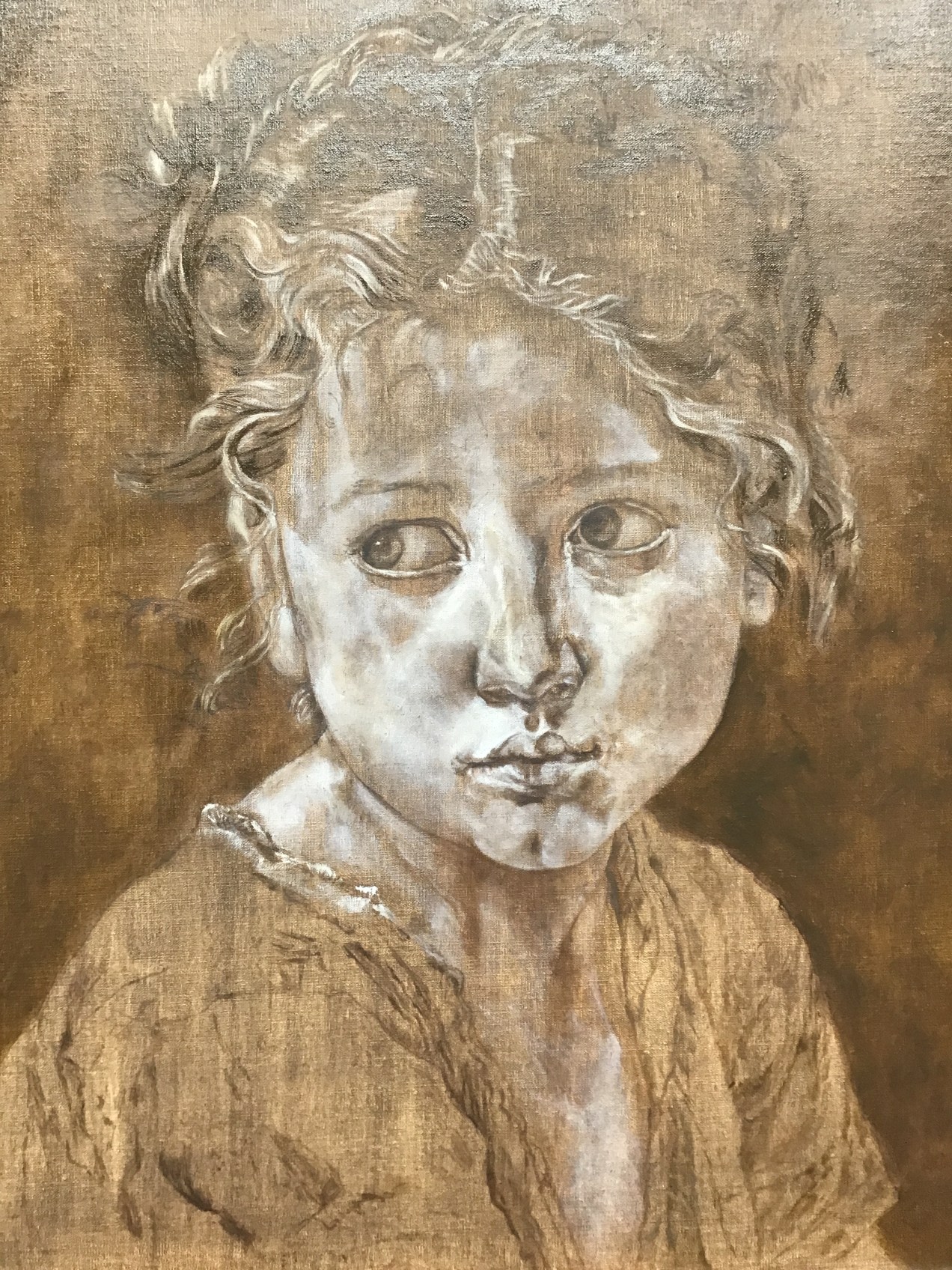
At The Foot of the Cliff
Today I finally stumbled on a post of Bouguereau’s paintings that gave the name of this one. I hope to show this in the near future but I will include ‘Master Copy’ in the title. I am surprised at how excited I am to be painting something that is not my design. It certainly is a learning experience. Today I darkened the background and this is only the first of several glazes. It is necessary to get this background established for several reasons. Mostly, it is needed to balance the values in the rest of the painting. Also, this dark needs to be under or behind the model. But, I had to place a lot of the brighter hair and blouse before I began. These will preserve the drawing even though I might have to paint over them. I then found my way around the maze of hair, to establish light, dark, curl, depth and fly away hairs. After this dries thoroughly I will put a halfpaste over all the flesh and the blouse as well. I am pleased to be using a birch ply, sealed with a zinzer conservative sealant, and with a linen surface glued with an archival glue. I often do this because it is easier than using stretched lined and I can have the ply cut to fit a frame that may not be a standard size. Any pieces that are left, can be made into small canvasses as well.
Class tomorrow, so I better get some sleep. Hugs, Diana
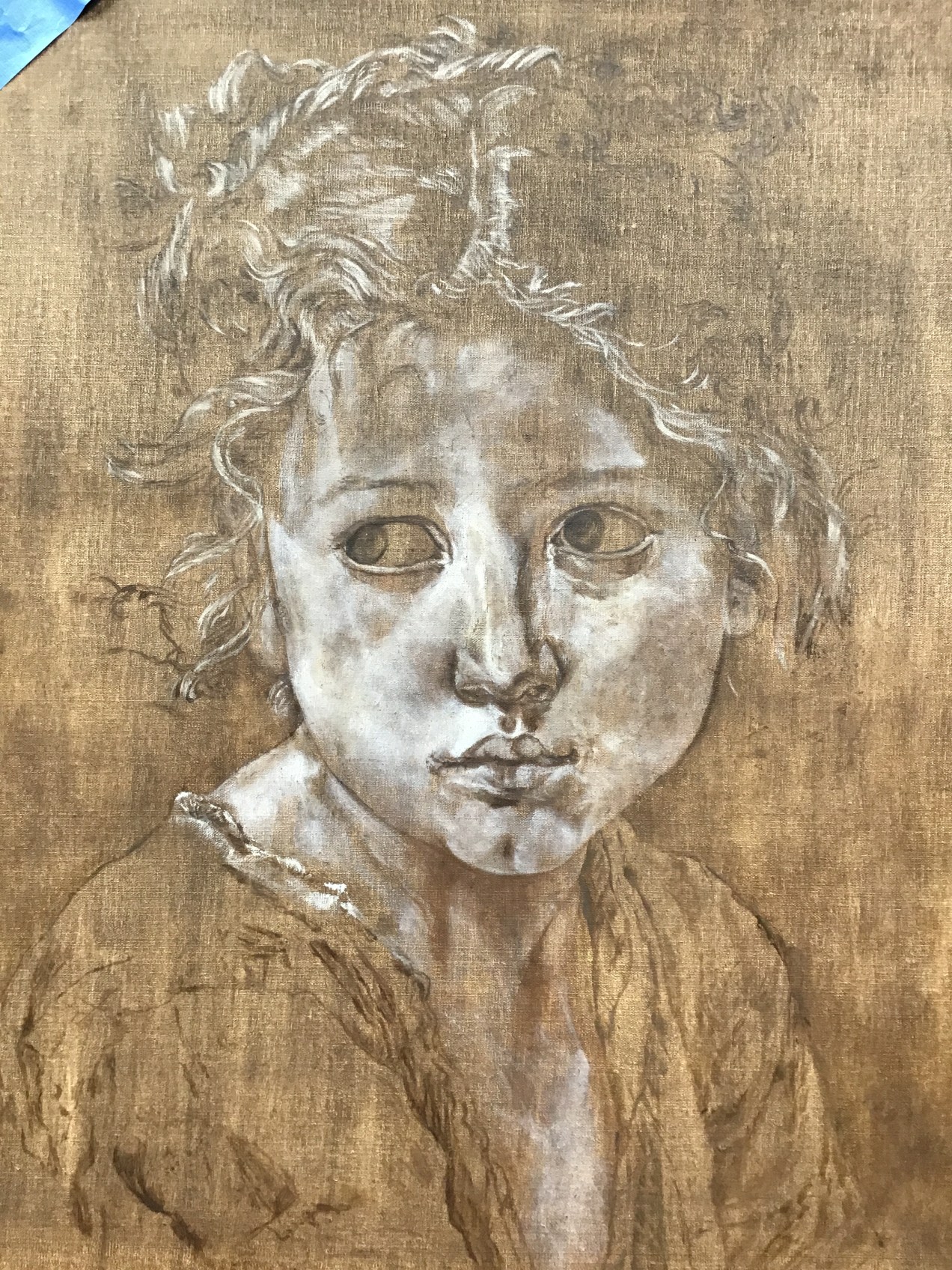
Bouguereau!
He surely knew hair. As I attempted to get the grisaille laid in I found that even a strand of hair has been painted with the knowledge that this strand consists of multiple hairs and they have specific directions and light. I am frazzled.
Please share. I would like to find the right buyer for this Master Copy. I will not let it go to just any art lover but to someone who knows and appreciates The Master, William Adolphe Bouguereau. And she won’t be available until after my show in Ligonier. This is truly a joy!
Diana
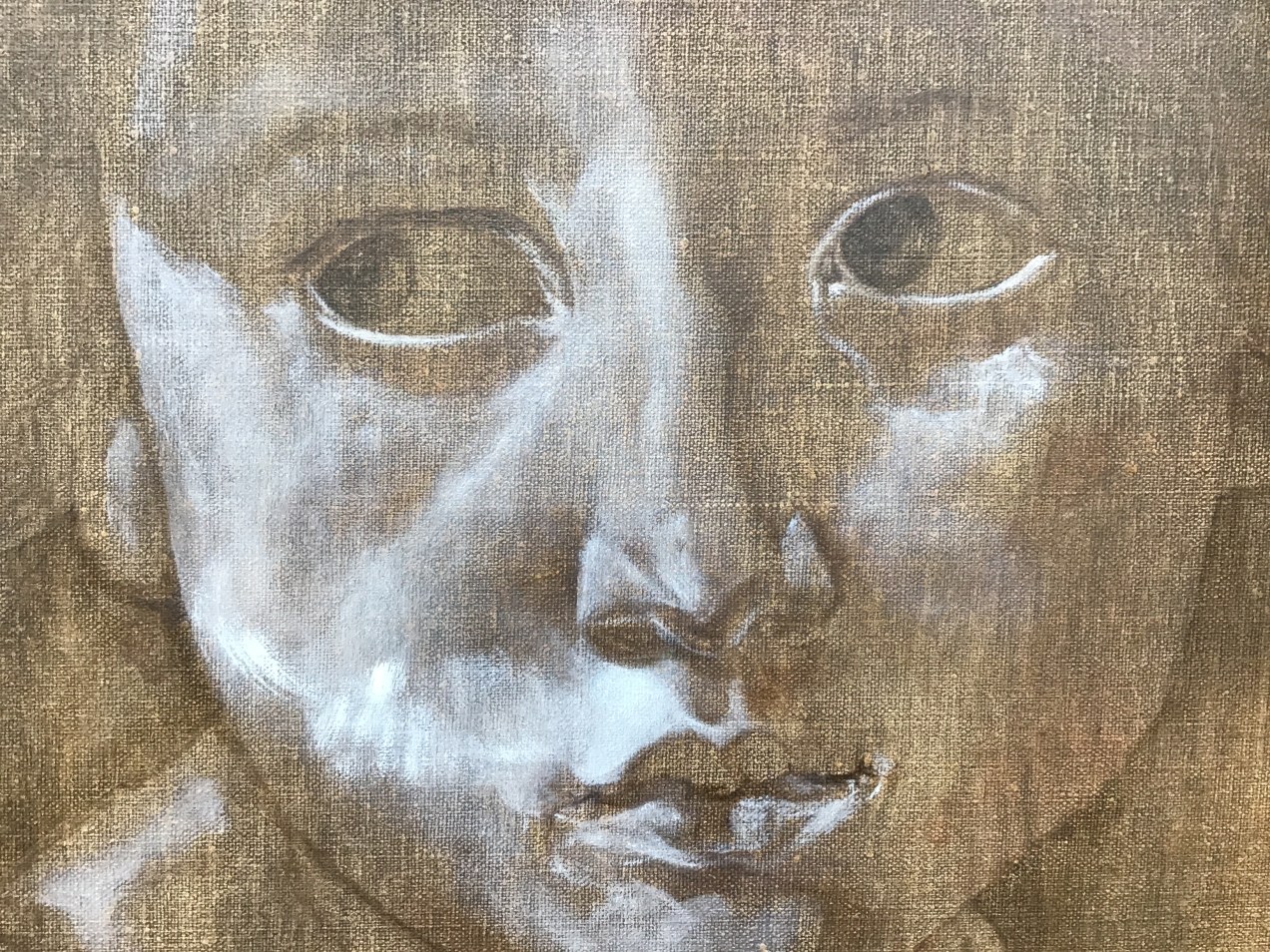
Light patterns
When painting portraits it is often important to observe and follow light patterns; the directions the light flows across the form. When I can detect a pattern, I try to apply that same shape of ‘bright’ to the painting. It is this procedure which helps to make the feature seem three dimensional on a flat canvas. I call this SCULPTING the image. I use this process in the grisaille and then I repeat the patterns in the flesh layers as well.
In attempting my first master copy I have already recognized that Bouguereau did, in fact, understand hair. He knew how each strand composed a curl or braid, how it caught the light and how to transpose all that information onto the canvas with oil pigments! He was a master, indeed!
 Diana Williams Portraits