
This doesn’t look like much but it takes skill and patience. Every muscle must be correct or the expression is not captured. Then, you must know when to stop so that the next application will achieve the results you are looking for.
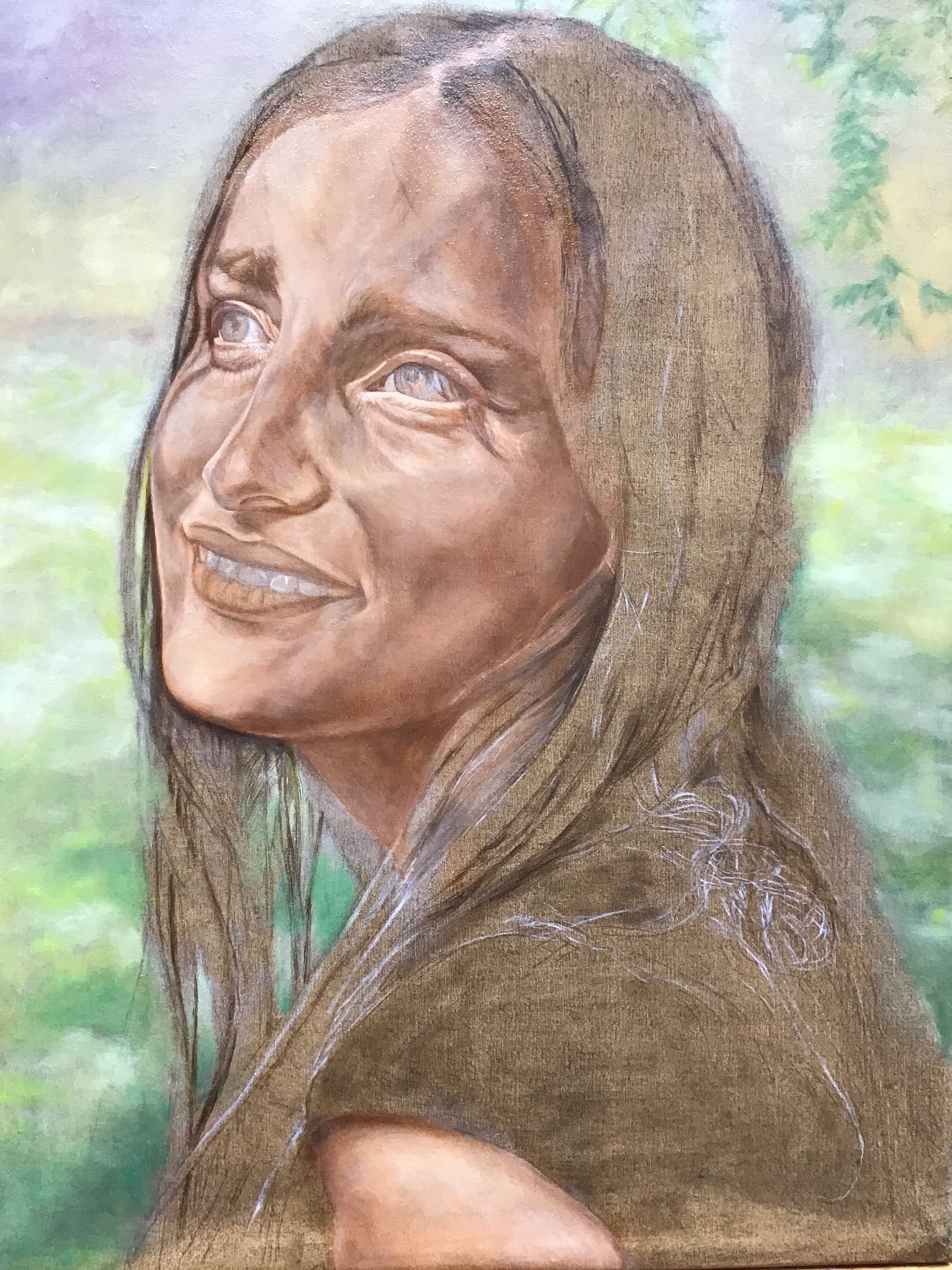

This doesn’t look like much but it takes skill and patience. Every muscle must be correct or the expression is not captured. Then, you must know when to stop so that the next application will achieve the results you are looking for.
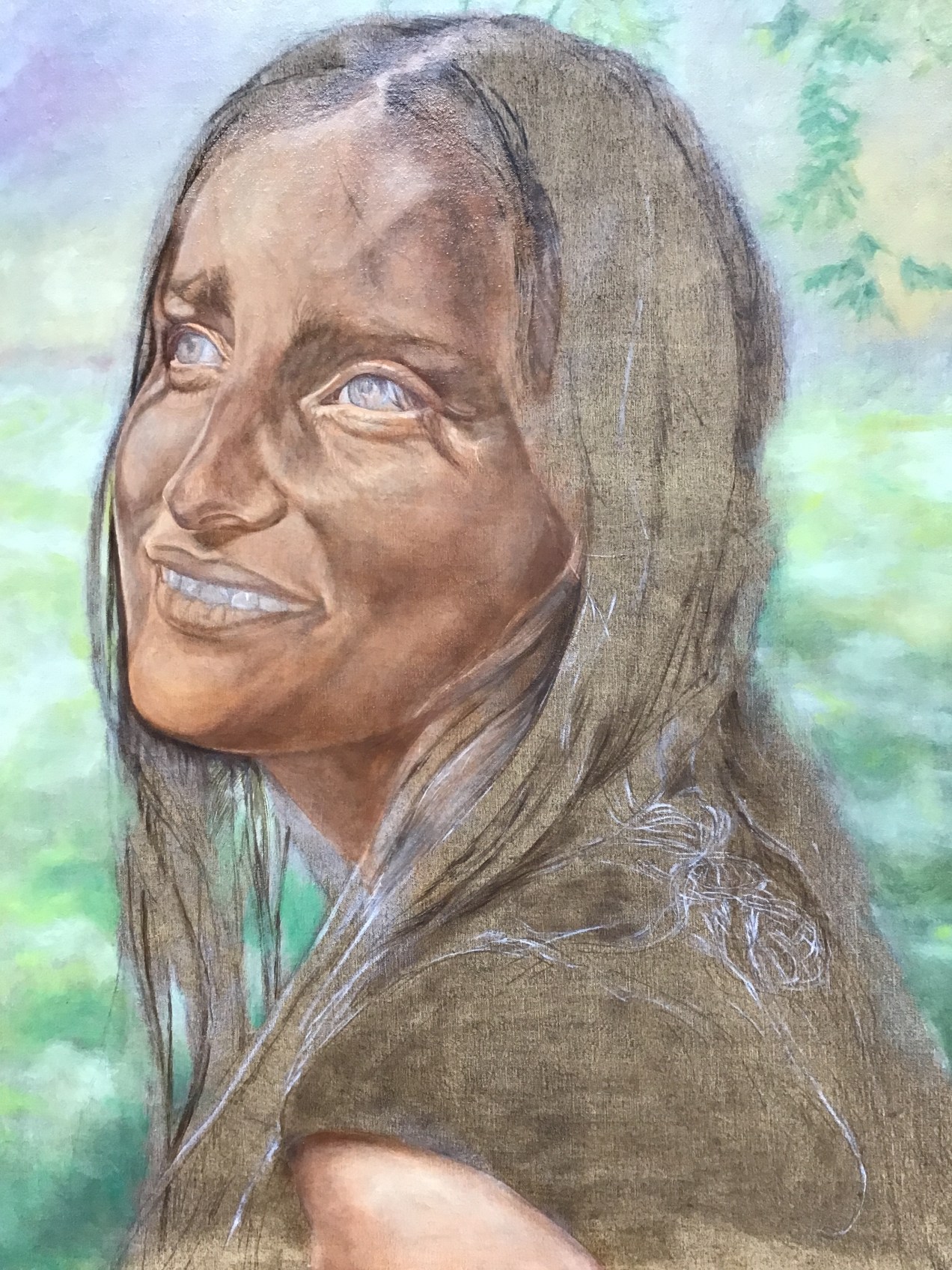
We traveled to Ohio and of course I felt worse every day because of what seemed like an obstruction in my throat. As it turns out, I was suffering from an ear infection and possible abscess in my throat that had been simmering for weeks because the first meds did not wipe it out. I am grateful my daughter suggested stopping at an urgent care center near home on our way back. Now I am fired up and ready to make up for lost time. But my cardiologist isn’t confident and so I will see my family doctor tomorrow. Anyway, I am getting as much done as possible while I can.
Here is ‘Argentine Eyes’ with the second application of flesh. I have used a soft fuzzy old brush to work the color into the canvas. Then I used a soft fan brush to buff it to a high shine surface in order to sculpt now with white and Naples yellow or even yellow ochre if I need it. Then I will softly add darks to the shadow areas. I will use a neutral dark or a dark purple, which ever seems best. My goal at this point is to brighten the flesh and make the light a focus of the portrait. Have fun and enjoy your painting. Also welcome to our new subscriber in Luxembourg! Shalom, Diana
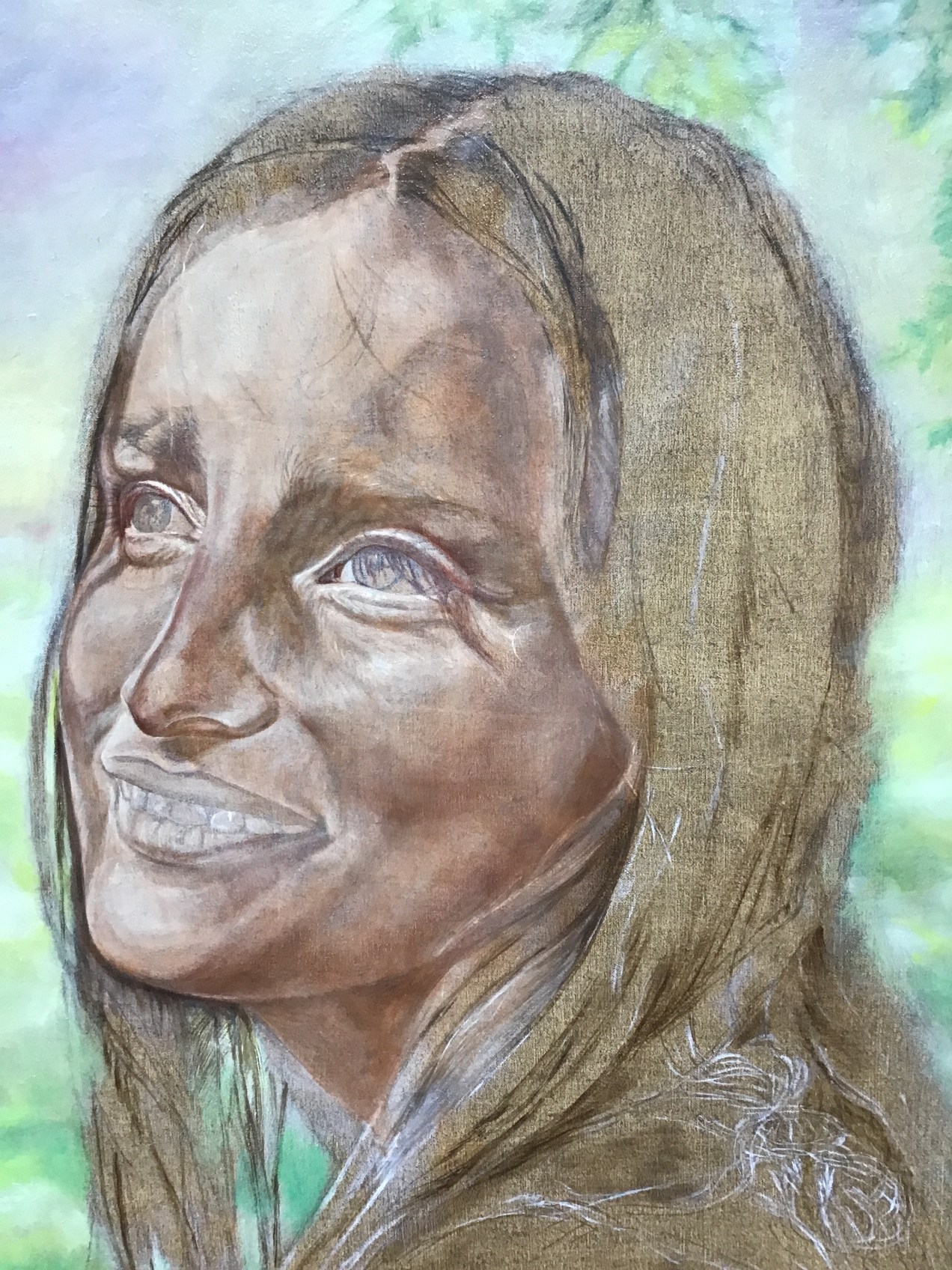
I want my students to know that this can be done. It is like the question, ‘How do you eat an elephant? – One bite at a time!’ This can be done! But you can succeed only if you have patience. The circumstance that helped me learn this technique is the health condition that limits my endurance. I needed a way to paint where by I could quit at almost any stage in the work. This method requires extreme concentration sometimes, but the method also makes it necessary to stop so it can dry and so that the subject is not destroyed by too much fussing around without a plan. Often my students tell me they think they have ruined their project. When I look at it, I see the layer, all ready for the next step. They have just not yet learned to recognize how each layer is supposed to look before moving on. Even when they have successfully finished a portrait, they don’t come to understand what they have done until they are working on the next portrait. It is only then that their brain recognizes the ‘landscape’ where they have been before and they now know how to proceed. In this portrait, the eyes have it! When looking for the subject which will make a good painting, look for something that will get the viewer’s attention. It could be a shadow, an expression, even an idea that the subject represents well and clearly. Then, make it your goal with every painting to make every mark, every brush stroke speak and draw the viewer in. I hope you enjoy the painting as much as I do. I have a friend who is a wonderful artist but he tells me his work causes him anxiety. It would take more dedication than I have to continue under those circumstances. I hope this will resolve itself and that he will begin to relax and enjoy the process. Let us count our blessings every day. Shalom, Diana
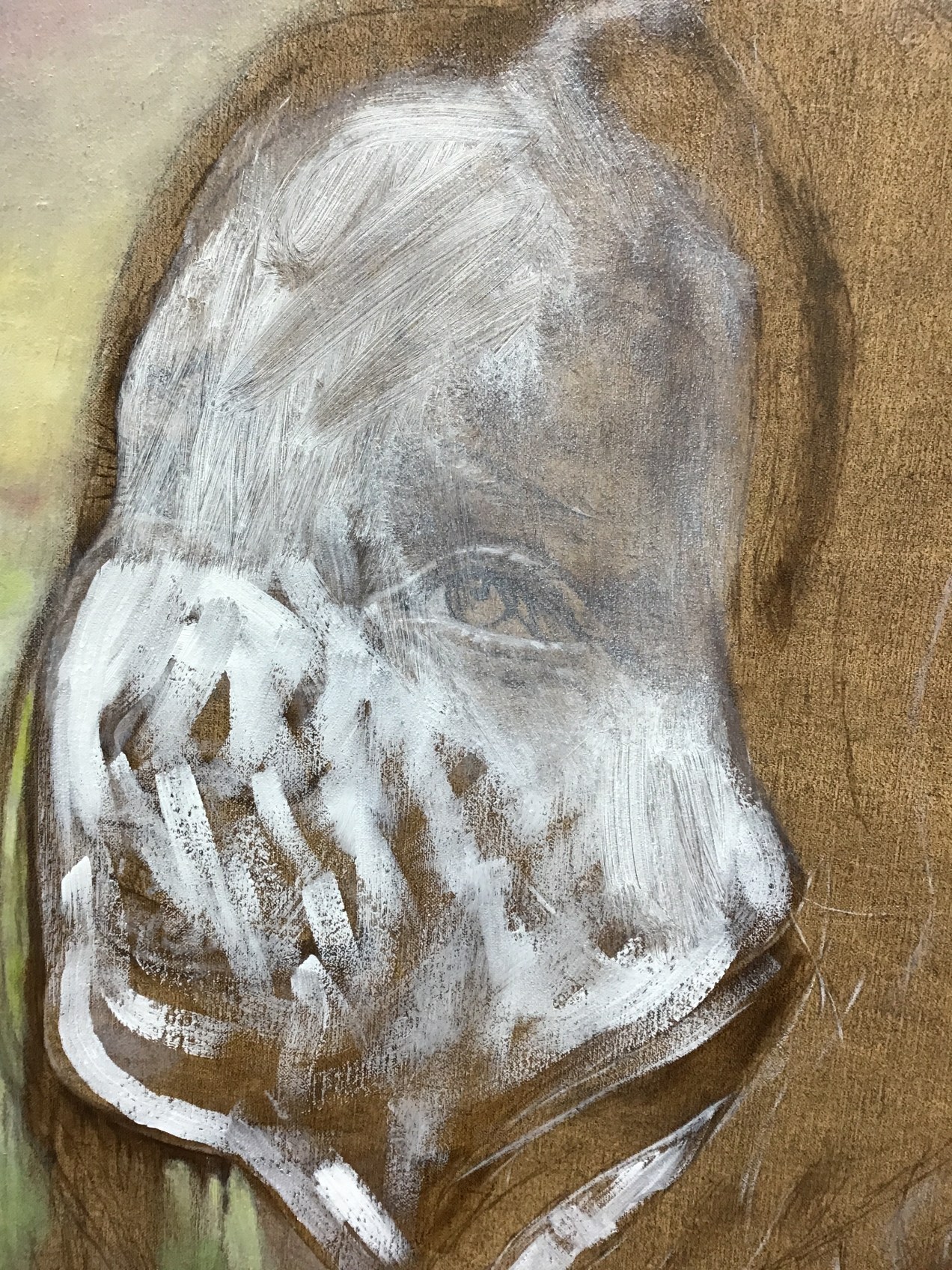
This process adds what amounts to putting skin over the structure of flesh and muscle that forms a likeness. Most portrait artists manage without this step. I was not satisfied with my early work until I stumbled into this process. When I do the flesh color, I always sculpt with white or Naples yellow. Eventually, I came to realize that it was an even layer of skin that was missing. So I dropped back to the step of darks and brights. Adding it here allowed me to manipulate these values until they seemed right. When an artist watches their portrait come to life, it adds a joy and excitement to their work. I sometimes can hardly wait to finish one project so that I can begin another. I hope you all enjoy your art.

Usually I don’t add detail at this stage but this girls eyes are the entire focus of the painting. They have to be perfect or I will have failed to capture a truly descriptive image. When adding minute detail at this point in the process it is important to use just the right amount of strength of value; not too dark, not too light. These marks will hold the place as I add layer after layer. They will still be visible when I need to finish the work. Their presence under the layers will add a shadow of reality under the fresh top strokes. I am sitting in front of this canvas that was bare three days ago. Already there is a radiance glowing from the spirit represented here. This is what excites my students and helps them get past the struggle! HalleluYah! I am so thankful to be able to make it to my studio every day and even for the new/old med that my doctor gave me to control my tremors. I am blessed.

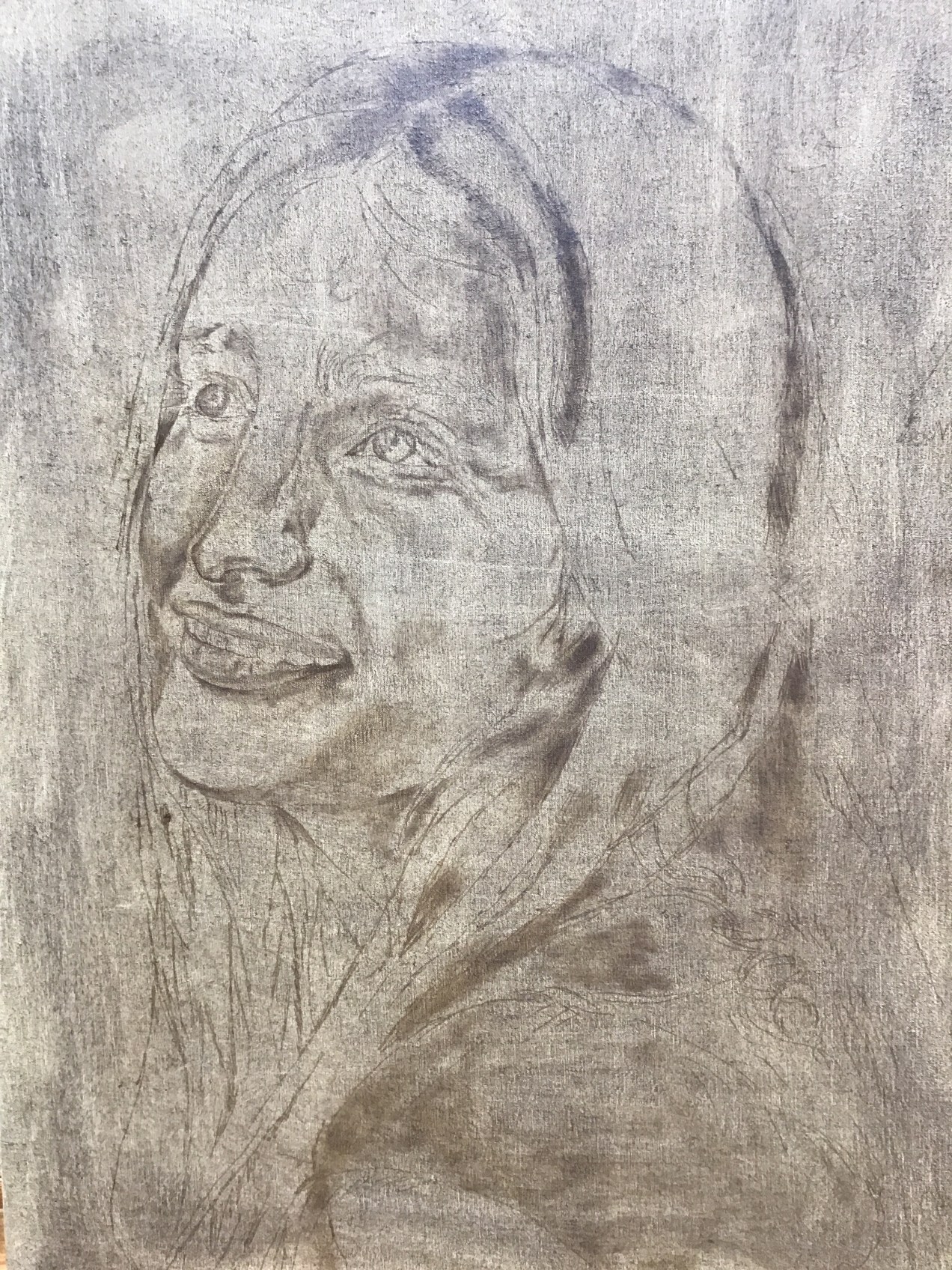
It is so important to mark these brights and get them as close to accurate as possible to save time later. I tell my students that portrait painting is the art of correcting, correcting correcting! Then I MAKE EVERY EFFORT TO GET IT RIGHT THE FIRST TIME. Here you can see how I began with the transfer and then if your paint is still wet (many artists want this transfer to dry, I don’t) this is when you take a soft brush and also one with a good edge and then, using the same neutral paint as in the underpainting surface and the transfer, I now go over the entire portrait to soften all the shadows and refine any edges that need correction. Buff gently between each layer. To do this, I use a soft but firm fan brush to gently buff the surface to eliminate the brush marks. This is necessary to achieve the supple looking skin that characterizes my work. I am going to proceed to a new post to show you what I did today.
Hello to all the followers and friends of this art and this webpage. As you probably know, the world is in turmoil. We are blessed to have a compelling distraction for some short hours as we do our creative endeavors. I will also briefly mention that my family has been affected by what is being called ‘excessive deaths.’ Like anything else, death rates have been charted for who knows how long. There is now a surge in the charts. I will let it up to you to check it out as you wish. The loss and grieving we are experiencing has interrupted my productivity and the next thing that threatens to interrupt it is a worsening health condition. So, in spite of all that, I am ready to get back into some work. I don’t like to call it work but it does take time and effort.
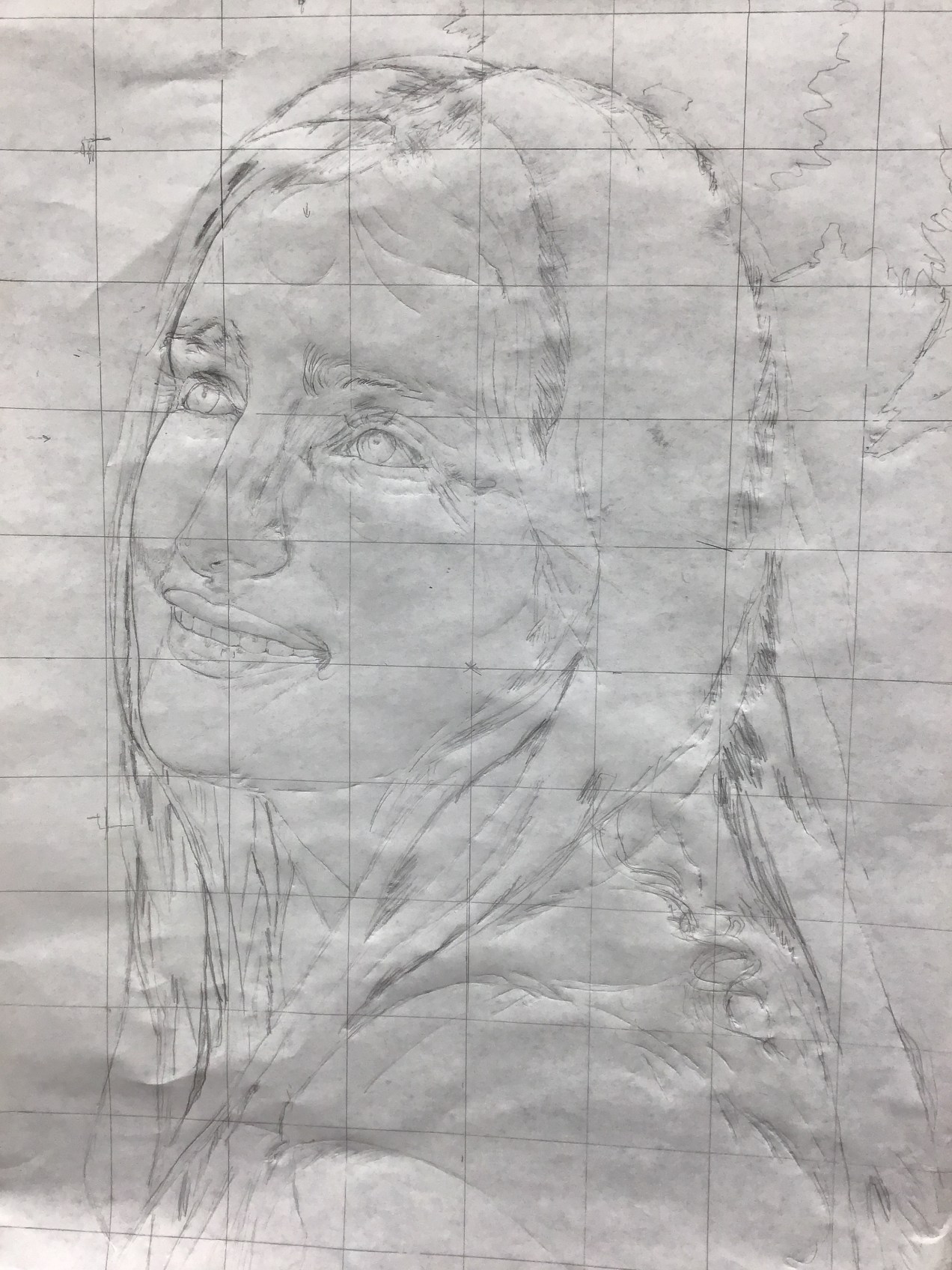
I hope I have managed to insert two images of the raw beginning of this portrait. The first is the drawing, if indeed it shows up first. I worked on this for about four days, from two to three hours each day. It is one of the types of images that I hope to do justice to the light, especially in the eyes, which are the focus of this painting. I spent hours just studying the placement and shape but later it will be the colors and light that will challenge me. The next image is the transfer to the canvas. Upon completing the transfer, I make an effort to soften the lines and shadows, adding more of the same color that I used for the transfer. I do this to add detail or shading wherever needed. On my next post, I will show you today’s work. I have painted in the most prominent brights. In this way, both the shadows and the light are established and corrected from the beginning. I do hope you enjoy watching the steps to creating what will probably be entitled, ‘Argentine Eyes’ Shalom, Peace, Diana
The second image did not show up so I will try again. Since it won’t let me add, I will do a second post. Let me just say that I hope to make some changes soon that will help with these problems. So sorry.
 Diana Williams Portraits