
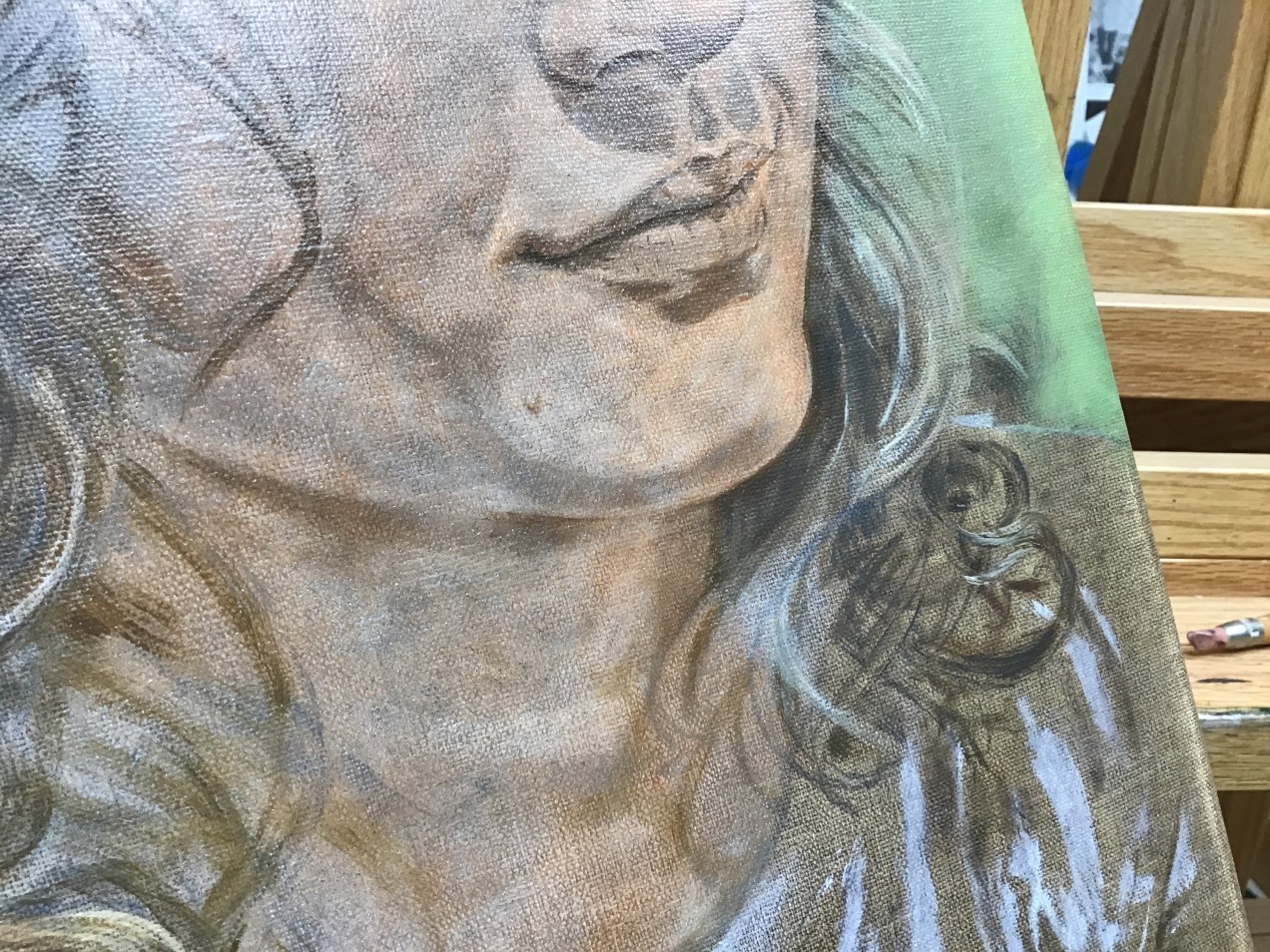
This may feel like a difficult task. We must remember, it is a first layer. After you apply the flesh, mixed half and half with gel, be sure it is spread into the weave of the canvas evenly and then use a fan brush to buff it to a high gloss surface. Now you must decide if the brights are white, yellow, or some other shade. I often use Titanium, flake or lead white, Naples Yellow, or a blend of these,(for Caucasian skin color and sometimes even for darker skinned people.)Apply them by following the light patterns you see on the sitter or reference material. Place the paint with the best sable brush if you have it, or a synthetic. Make the first layer as accurate as you can, smoothing the paint with your soft brush. Then, with a very soft but firm or bouncy fan brush, buff this flesh. This is where you will answer your question, ’How much paint?’. You will learn from practice just how much to apply in each layer so that it can still receive a buffed surface. THE FIRST LAYERS OF FLESH ALWAYS LOOK BLOTCHY! In this method, each layer will enhance the suppleness and realistic look of the skin. Many students are content with two or three layers. Later they comment how real the skin on my portraits looks. This is achieved by multiple layers of transparent flesh. You will learn later to add the richer tones of the skin surface with transparent glazes. These colors may be introduced earlier but each painting sort of sets its own pace. Remember two things; continue to make whatever corrections are necessary and, two, ’if it doesn’t look right, it is just not finished!’. Enjoy spring. Diana
 Diana Williams Portraits